
Why Private Equity Needs Fractional Executives Now
Private equity fractional executives: The Operators founder Kit Lisle on value creation, the wait and see doctrine, and coaching the team you already have
 Matthew Mottola
Get this in your inbox every week. Join 26,000+ subscribers.
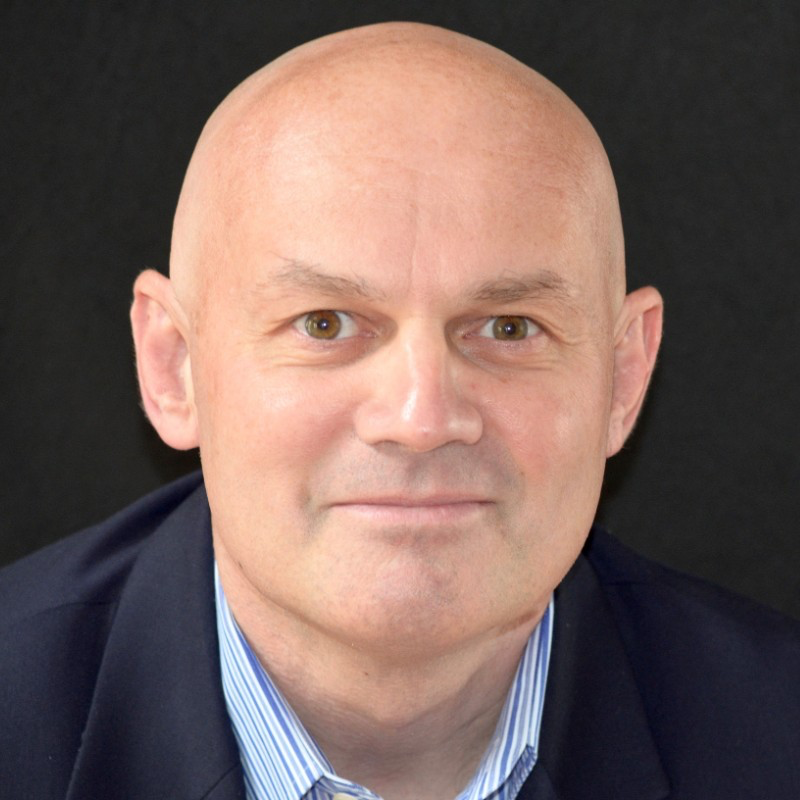
Kit Lisle has spent 30 years in the private equity ecosystem, most of it as a consultant. Three years ago he founded The Operators, a community of about 800 private equity-backed executives. He joined Matthew Mottola to talk about why private equity fractional executives are now part of the value creation plan.
Why Private Equity Needs Fractional Executives
Kit works with the bottom of the private equity pyramid. KKR, Carlyle, and Blackstone have deep networks and big staffs. The thousands of lower-middle-market firms most people have never heard of don't. They try to find executives on their own because recruiters are expensive.
That's where Kit's community comes in. The Operators started as a place for CEOs, CFOs, and COOs to network and keep learning. It turned into a bench he can place into specific problems.
He still resists the label. Matthew asked whether being called part of the talent industry makes him want to throw up. Kit said he had the same reaction.
"I go to great lengths to say, I'm not a recruiter, but I kinda sort of am." - Kit Lisle
Private Equity's Housing Crisis
From 2017 to 2019, Kit says, you couldn't screw it up. Buy at seven or eight times earnings, hold, sell at nine or ten five years later. Everybody felt like a genius.
Then came 2021 and 2022. Investors expected returns on a timeline, so firms had to deploy capital, and they overpaid to do it. Now it's time to sell. Kit compares it to buying a house in 2007 and trying to sell in 2011.
"They actually have to do stuff to make value. So it's called value creation." - Kit Lisle
Private Equity Value Creation, Defined
Matthew admitted the phrase cracks him up. To a founder it just sounds like making money. Kit agreed the term is fuzzy.
"If we asked 20 different private equity professionals to define value creation, we'll probably get 23 different answers." - Kit Lisle
His definition starts with the exit. Everything a firm does prepares the company for the next buyer, the way you fix a rusted roof before selling a house. You reduce risk, make the investments a buyer would otherwise have to make, and prove the business can scale.
Kit groups the work into six levers: alignment, operational efficiency, clean data, a leadership style that scales, organic growth, and add-on acquisitions. Pull them well and the company sells closer to sixteen times EBITDA than six.
The Wait and See Doctrine
Most lower-middle-market firms call themselves founder friendly. Kit says a few really are. Most tell the owner they won't change much, then wait nine to eighteen months. What they'd really like is to replace the whole management team on day one.
Kit's alternative is to assess every leader during diligence. Be candid with the ones who won't make it. Train the ones who will, starting with the basics of how private equity works.
He shared a story from a COO in his community. After the acquisition, the COO sat through a 45-minute board meeting with two people in their twenties, taking notes and nodding.
"I understood exactly nothing of what they were saying." - a COO in The Operators community, as told by Kit Lisle
The COO went back to his cubicle, put his head on the desk, and called his wife to say he needed a new job. Kit's point is that onboarding would have changed that. Even the word exit means something different to a plant manager than to a deal team.
Interim and Fractional Executives Beat the Big Consultancy
Matthew played the skeptical founder. Why not hire the brand-name consultancy, with the nice suite at the baseball game, and never get fired for it?
Kit's answer was range. His community can supply a due diligence expert, an advisor to the CEO, a coach, an interim or fractional executive, or a board member. If a firm wants to give the quasi-CFO a shot at the real title, it can bring in an interim CFO to teach and then leave.
"Look, I am an interim CFO. I don't want your job. I don't need your job." - Kit Lisle, on how a good interim executive frames the role
Matthew summed up the difference. A consultancy shows up, presents, and leaves. A fractional operator embeds in the team and leaves it stronger.
Why This Needs Infrastructure
Kit's model works because a private equity firm can reach the right operator fast, for the exact problem it has. Most companies, PE-backed or not, still find that kind of talent through whoever is in their network.
That's the gap Human Cloud closes on the company side. Buyers find and compare flexible talent solutions across 1,000+ platforms, from fractional executive networks like The Operators to specialist consulting and tech partners. They see verified results from real customers, and compliance stays in one system. Companies use flexible talent to move faster and bring in expertise they can't hire full time.
The Bottom Line
Private equity can't wait out the market anymore. Value creation now runs through the leadership team. Kit's case is to keep the people who can grow into the job and put private equity fractional executives next to them.
About Kit Lisle
Kit Lisle is the founder of The Operators, a community of about 800 private equity-backed executives. He has 30 years in the private equity ecosystem, most of it as a consultant, and places operators into lower-middle-market portfolio companies. The Operators on Human Cloud.
Listen to the full episode: Human Cloud Podcast on Spotify
Presented by Safeguard Global. The employer of record that lets you hire, pay, and manage teams in 187 countries without the risk. Meet Safeguard Global on Human Cloud.
This article was adapted from the Human Cloud Podcast. Subscribe wherever you get your podcasts.
Get insights like this every week
Join 26,000+ leaders staying ahead of the flexible talent market.