AI Is Coming for Your BPO Contract, Not Your Headcount
Dexian CEO Maruf Ahmed on why AI automates the BPO layer before it touches headcount, and how to grow top line 20% instead of cutting 20% of your team
 Matthew Mottola
Get this in your inbox every week. Join 26,000+ subscribers.
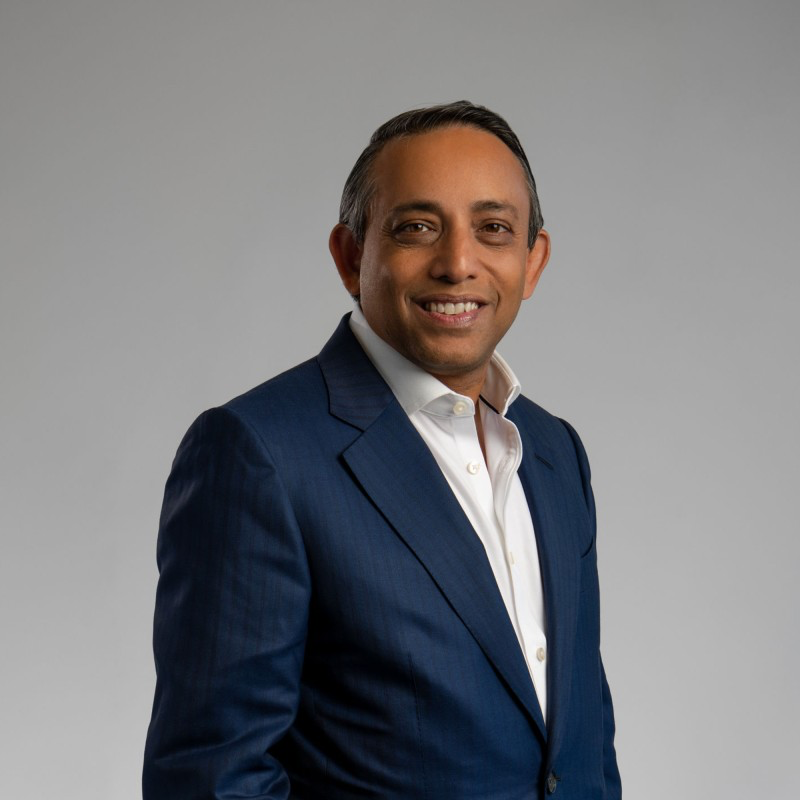
Maruf Ahmed has watched three technology waves reshape the talent market from inside a firm that now staffs half the Fortune 500.
AI and the BPO Industry: The Big Idea
Every conversation about AI and the BPO industry starts in the same wrong place. A leader models a 20% workforce reduction, sees a 10% bump in the stock price, and calls it a strategy. Maruf Ahmed, CEO of Dexian, thinks that math is backwards, and he has an unusual vantage point from which to say so. Dexian has been in business since 1994 and now spans 70 locations, 10,000 employees, and 2,000 clients.
His argument is about which layer of the stack AI actually removes. It is not your team. It is the outsourced contract sitting next to your team.
Business process outsourcing was sold on one promise: take the repetitive, low-level, foundational process work off your plate and run it cheaper somewhere else. That promise had a shelf life. Agents are now genuinely good at exactly that category of work, which means the BPO value proposition is being automated out from under itself.
"The BPO business is in trouble. BPO business is getting automated far more with the AI agents, and the value prop that was out there, which is again some of those foundational low level repetitive tasks, AI is taking that." - Maruf Ahmed
What does not get automated is the opposite input. A person who understands your systems, your vision, and the project in front of them. Ahmed's point is that this makes flexible human talent more important, not less, and that leaders cutting headcount first are removing the scarce resource while leaving the abundant one under contract.
Contingent Workforce Strategy: Why Staffing Gets More Important, Not Less
There is an obvious objection here, and Ahmed raised it before we could. He runs a staffing company. We run a platform for finding flexible talent solutions. Neither of us is neutral on whether staffing survives AI. So take the structural version instead, which does not rest on staffing being special. It rests on what happens after AI compresses the org chart.
If a team of 100 becomes a team of 10, those 10 people are each doing five times more things and owning far more of the judgment. Every one of them sits closer to the core of the business than anyone on the team of 100 did. At that size, handing process work to a vendor who does not deeply understand you stops being efficient, because there is no longer enough defined, decomposable work to hand over. What is left requires context.
"Even in the best of times, you don't want your employee base to be 100% just employee. You want to have your workforce flexibility because you don't have 100% of the work all the time." - Maruf Ahmed
His model is ninety permanent, plus ten when a project lands. The ten still have to know you. That is a fundamentally different procurement problem than buying a BPO contract, and it is the problem a contingent workforce strategy has to solve now.
AI ROI: Stop Counting Saved Hours, Start Counting Top Line
The measurement problem is where Ahmed sees his clients struggle most, and his diagnosis is sharper than the usual complaint that AI ROI is hard.
"Not, I saved Matthew one hour. Just because I saved Matthew one hour, that doesn't mean that he was more productive for my company by one hour and dropped some EBITDA or sold more." - Maruf Ahmed
Saved time is not value. It is potential value, and it only converts if the freed capacity gets pointed at something that moves revenue. Which leads to the reframe that gives this episode its title. Ahmed's recruiters could screen five candidates a day. AI can screen candidates. The obvious move is to hold output constant and cut half the recruiters. The better move is ten candidates a day per recruiter, and you keep everyone.
Unless you are a monopoly, you have competition, and getting better at winning business beats getting cheaper at running it. His warning on the stock-price version is blunt: if you are short-term oriented, you usually end up paying for it long term. A reduction that comes from an honest analysis of where humans, agents, and automation each fit is defensible. A reduction that comes from wanting the announcement is not.
The Entry-Level Problem Nobody Has Solved
The most uncomfortable part of the conversation was not about cost at all. Ahmed is seeing demand fall for junior developers and testers, and he is candid that he does not know what it costs us.
Entry-level work was where people learned the systems, failed in low-stakes ways, and built judgment. Remove the tier where judgment gets made, and you have a pipeline question five years out that no rate card shows you today. He started his own career in quality assurance.
"There is a reason why people say you need 10 years experience here or five years experience there. It is the experience that comes with learning, failing, doing those things." - Maruf Ahmed
He is honest that this pattern has repeated before and mostly resolved. He worried about memory management and pointers; the generation after him did not, and the work got done. But he flags a difference that matters. In previous waves, new tools raised the floor while the foundational work still had to be done by someone. This time, AI is doing the foundational work itself.
The same bifurcation shows up in rates: no wage depression on standard technical roles, real premiums on AI specialists and forward deployed engineers, and demand shifting toward nearshore rather than the bulk offshoring wave of a decade ago.
Why This Is the Problem Human Cloud Exists to Solve
If Ahmed is right, the buyer's job gets harder, not easier. You are no longer buying capacity by the seat from a small set of large vendors. You are assembling a workforce out of employees, digital agents, and specialized partners who need to understand your business well enough to exercise judgment inside it.
That is a discovery problem before it is a procurement problem. The right partner is increasingly specific, and the market of possible partners is enormous and badly indexed. Most companies still find them the way they did in 1994, through a vendor list and whoever happens to be on it.
We built Human Cloud for that gap. We automate discovery, compliance, and orchestration across 1,000+ workforce platforms so business teams can move in minutes instead of months, procurement stays in control, and unmanaged contractor spend becomes a deliberate strategy. Ahmed is building the judgment layer on the supply side. We are building the front door to it.
The Bottom Line
The honest read on AI and the BPO industry is that the automation is real and it is landing on process work first. That should change what you cut, not just how much. The layer built to absorb repetitive tasks is the layer most exposed. The people who carry context, relationships, and judgment are the ones worth protecting, and the flexible partners who extend that judgment are worth choosing more carefully than a vendor list allows.
Ahmed's closing advice is not to go all in. It is to embrace it with governance, accept failures you can learn from, and avoid the fatal kind. Two years ago sitting it out was defensible. It is not anymore.
"If you're on the sidelines, regardless of the industry, you are probably falling behind." - Maruf Ahmed
About Maruf Ahmed
Maruf Ahmed is CEO of Dexian, a talent and technology solutions provider in business since 1994 that now spans 70 worldwide locations, 10,000 employees, and 2,000 clients including half the Fortune 500. He holds a master's in electrical engineering from George Mason University and was named to SIA's 2026 Staffing 100 North America list.
Listen to the full episode: Human Cloud Podcast on Spotify
This article was adapted from the Human Cloud Podcast. Subscribe wherever you get your podcasts.
Get insights like this every week
Join 26,000+ leaders staying ahead of the flexible talent market.