How to Build Long-Term Global Software Teams
Matt Watson built a 300-person global software team without long-term contracts. Why most offshore development fails, and the model that actually works
 Matthew Mottola
Get this in your inbox every week. Join 26,000+ subscribers.
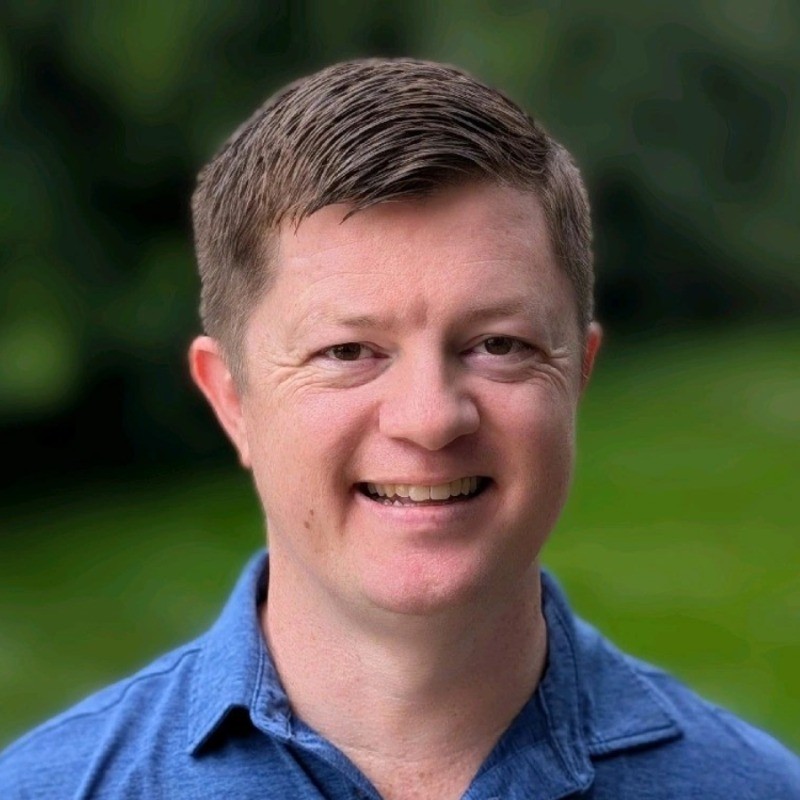
Matt Watson shares what eight years and 300 engineers taught him about building global software teams that last.
Why Most Offshore Software Development Fails
Before Matt Watson built anything, he went looking for the failure stories. He found plenty. By his estimate, eight or nine out of every ten leaders he spoke to had tried offshore software development and come away burned.
What separates Full Scale from the firms in those stories is that Matt asked a more precise question. Not "does offshore work," but "why did that specific engagement fail, and what has to be structurally different?"
His answer had nothing to do with talent, time zones, or cost. It was an org chart problem. The traditional model put a technical project manager between the client and the engineers. Requirements went in one end, code came out the other, and the people building the product never spoke to the people who understood the problem.
That arrangement looks clean on paper. In practice it removes the single thing that makes engineering work, which is the ability to ask a question the moment it occurs to you.
"The closer the team member is to the problem, and you can manage them and have influence about how they do their work, you're going to have more success." - Matt Watson
Staff Augmentation Puts the Team Closer to the Problem
So Full Scale runs true staff augmentation. The engineers work directly for the client. No intermediary translating requirements, no account manager fielding questions, no queue between context and code.
The reason this matters more in 2026 than it did in 2016 is that the bottleneck moved. Writing code used to be the slow, expensive step, which made a layer of indirection merely inefficient. AI compressed the writing. What remains expensive is knowing what to build and why.
"We're in this world now where it's all about context. It's like the speed of context. If I know what needs to be done and I can ask all the questions and I can figure it all out, the code almost writes itself." - Matt Watson
Read that alongside the old model and the conclusion is uncomfortable for a lot of vendors. Every layer between the problem and the builder is now a tax on the only step that is still hard. A structure that was mediocre a decade ago is disqualifying today.
Building Distributed Engineering Teams Starts With Communication
Full Scale hires in the Philippines, and Matt is direct about why. It was not cost. Every offshore market is cheaper than San Francisco, so cost differentiates nothing.
It was English fluency, because software development is a communication job wearing a technical costume.
"Software development is a lot of communication every day. Why are we doing this? I need to ask a lot of questions. I need to validate assumptions. I need to push back on the design." - Matt Watson
Compare that to work like video editing, where you train someone once and the task repeats. Language friction there is an inconvenience. In software it is the entire job. The practical lesson for buyers is not "hire in the Philippines." It is that different roles follow different geography rules, and matching a market to a blended rate card instead of to the actual demands of the work is how engagements quietly fail.
The same logic extends to management. Matt's single sharpest tactic: never ask a yes or no question when you need the truth. "Do you need help?" gets a no from precisely the person who needs help, and the effect compounds across cultures where raising a problem reads as creating friction rather than showing initiative. Ask what is slowing you down. Ask where you got stuck. Give people a question they cannot close with one word.
The Long-Term Team Without the Long-Term Contract
Here is where Full Scale's model inverts the industry. Matt's stated goal is helping companies build teams that last for years. He does it with no long-term contracts at all. Clients can return engineers on thirty days notice.
That sounds like a concession. It is closer to a filter. The commitment worth having is the one a client keeps because the team is good, not because procurement locked them in for eighteen months.
What earns that renewal is operational depth most companies cannot build for themselves. Full Scale runs training, mentoring, daily reporting, and accountability infrastructure across 300 people because at that scale it has no choice.
"We do a way better job of all of these things behind the scenes than ninety percent of our clients would ever do. If you're a development team that has ten developers, odds are you're probably not really good at training and mentoring and holding them accountable." - Matt Watson
That is the oldest argument in professional services, and AI made it sharper rather than weaker. The coordination layer that used to justify a management hire is increasingly a workflow. What is left is genuine operational expertise, which is exactly what a company doing this occasionally will never accumulate and a partner doing it daily already has.
What This Signals for Flexible Workforce Strategy
One data point from the conversation deserves more attention than it is getting. With 300 employees, Full Scale sees natural attrition every month. Historically, clients backfilled those roles roughly ninety percent of the time. That reflex is gone.
It would be easy to read this as a hiring freeze. The numbers say otherwise. Full Scale grew twenty-five percent year over year, and Matt's view is that software has never been more affordable to build, which means projects that never cleared the business case suddenly do.
Demand did not fall. It changed shape. What is actually eroding is the assumption that capacity must arrive as a permanent seat.
This is the same shift Human Cloud was built for, approached from the other side of the market. Matt removes the distance between a buyer and the people doing the work. We remove the distance between a buyer and the right solution, collapsing discovery, compliance, and orchestration across 1,000+ workforce platforms from months into minutes. Both problems are the same problem: too many layers between a company and the capability it needs.
When headcount was the only instrument available, that friction was survivable, because you made the decision once a year. When capacity flexes continuously, the ability to find and deploy the right partner quickly stops being a procurement nicety and becomes the strategy itself.
The Bottom Line
Building long-term global software teams is not a sourcing exercise. It is a structural one. Put engineers directly against the problem, choose markets based on what the work actually demands, over-communicate the why, and earn renewal with operational quality rather than contract length.
The companies still treating global teams as a line-item cost decision will keep generating the horror stories Matt collected before he started. The ones treating it as an operating model will spend the next few years shipping things their competitors already wrote off.
About Matt Watson
Matt Watson is the Founder & CEO of Full Scale, a four-time founder with three SaaS exits who has grown Full Scale to 300+ engineers serving clients including AMC Theaters. He is the author of Product Driven and host of the Startup Hustle podcast.
Listen to the full episode: Human Cloud Podcast on Spotify
Explore Full Scale on Human Cloud: humancloud.com/profile/full-scale
This article was adapted from the Human Cloud Podcast. Subscribe wherever you get your podcasts.
Get insights like this every week
Join 26,000+ leaders staying ahead of the flexible talent market.