The will it, won't it economy is why you need to access, not acquire talent
Jobless claims hit their lowest level since 1969, Ford rehired the engineers AI replaced, and the $100K H-1B fee survived another challenge. Tony Buffum on why unpredictable policy is the strongest argument for a flexible talent layer.
 Tony Buffum
Get this in your inbox every week. Join 26,000+ subscribers.
The will it, won't it economy is why you need to access, not acquire talent
Here's what I'm watching this week (Access all stories):
- US initial jobless claims hit 187,000, the lowest reading since 1969, signaling a labor market that remains historically tight even as AI-driven layoffs make headlines.[1]
- Ford rehired 350 experienced engineers after AI quality systems fell short, a concrete reminder that replacing institutional knowledge with automation carries real operational risk.[2]
- An appeals court rejected the administration's attempt to halt a ruling that could impose $100,000 H-1B visa fees, adding meaningful cost and uncertainty to high-skill international hiring programs.[3]
Here's what I think this means for the industry:
The talent market is sending two signals at once, and they pull in opposite directions. Supply is tighter than it has been in more than fifty years. At the same time, the most-watched AI deployments are quietly reversing course, pulling experienced workers back in when the systems cannot hold. Buyers who assumed AI headcount reductions would free up budget and loosen supply are running that math again.
The H-1B ruling is the clearest example of the pattern. I wrote last year about why the $100K H-1B fee might be the best news ever for marketplaces and EORs, and this ruling is the reason that argument holds. The cost itself is not really the story. The story is that nobody can tell you whether it lands in six months, in two years, or never. That will it, won't it uncertainty is precisely why the answer is to access talent, not acquire it. When policy, market conditions, and technology are all shifting faster than an annual planning cycle can absorb, a workforce model built on acquiring headcount can only move at the speed of requisitions, and that is a liability. Access is what lets you respond in weeks instead of quarters. The companies that come through this well will be the ones who built that ability before they needed it.
Here's how Human Cloud is helping:
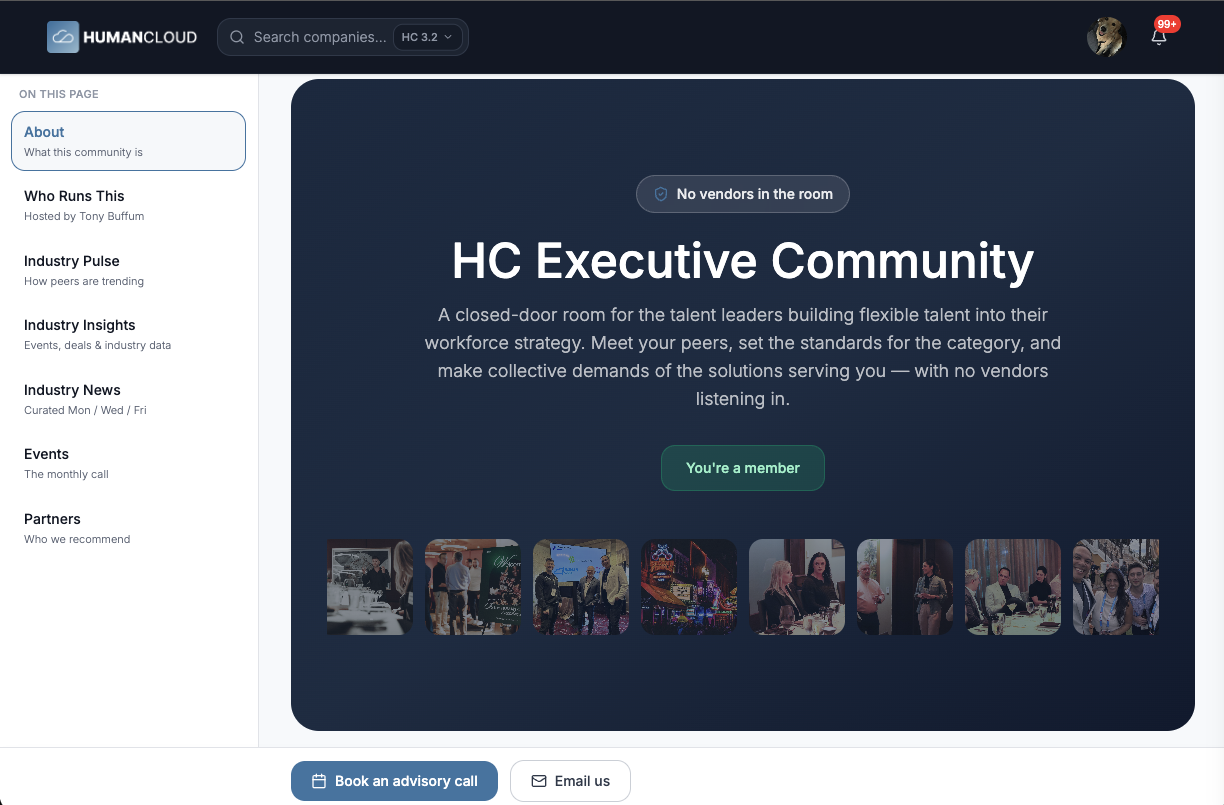
Most of the executives I talk to are working this out in private, which is exactly why the executive community exists. It is a closed-door group of your peers who are building flexible talent and talent access models into their own organizations, and the useful part is hearing what they tried and what broke.
 |
When you do move, an RFP is the fastest way to cut to the core of what you actually need. It replaces months of vendor analysis and a calendar full of intro calls with a clear brief and real responses. You can see EOR pricing without a single intro call right now, which is the whole idea. And where you want a partner alongside you, our advisory work is built so you end up running your own workforce, not beholden to a third party to operate it for you.
We'd love to see how we can help. Reply here or find a time with us here »
- Tony
|
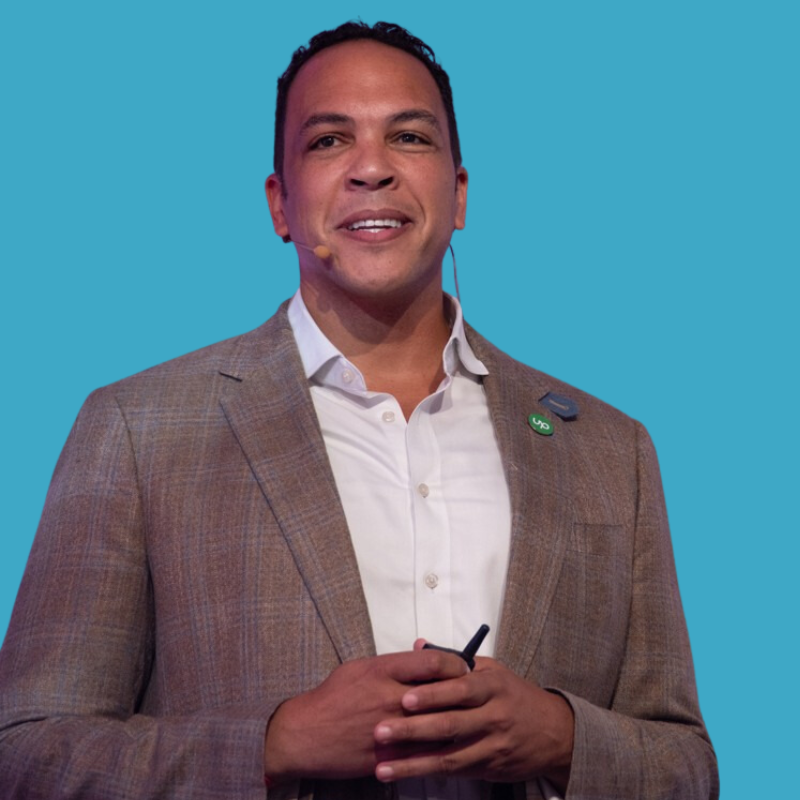
Tony Buffum Co-Founder & Chief Strategy Officer at Human Cloud. 20+ years in global HR and talent transformation. Former CHRO at FLIR Systems, VP HR at Stanley Black & Decker, VP HR Client Strategy at Upwork. Grab time with me » |
|
PS: Will you be at CWS in Dallas? We're hosting an exclusive dinner. Reply and I'll send you the details. |
Human Cloud Data
Your peers are demanding specialization
Every 39 seconds, someone is evaluating a solution on Human Cloud. Below is what our data is saying about where the workforce is going.
What the data shows
The flexible workforce is specializing, not consolidating. That fourfold jump in categories is not more searching, it is narrower searching.
Companies are not searching for "marketing" any more. They are searching for a marketer who knows their commerce platform, a technologist who knows their clinical setting, an operator who knows their kind of service business. The generic category is losing to the exact fit, and your peers are getting that fit through Human Cloud.
| Marketing | +67% this month |
| Advisory Consulting | +50% this month |
| Engineering | +50% this month |
| Caregiving | +33% this month |
| Healthcare and Life Sciences | +17% this month |
| Consumer Electronics | -17% this month |
| Developers | -20% this month |
| Civil Engineering | -25% this month |
| FMS | -50% this month |
| Healthcare | -60% this month |
Percentages are this month vs last month.
|
Want to take action? Launch an RFP for your biggest challenges. Need AI developers? There was an RFP for that. SOX consultants? There was an RFP for that. Launch an RFP → |
Get insights like this every week
Join 26,000+ leaders staying ahead of the flexible talent market.