The bill for growth without headcount
Korn Ferry says 62% of workers carry a significantly heavier load than two years ago. AMN Healthcare finds a 30-point gap between executives and frontline staff on whether leadership is working. New York City just took a record $131.5 million from DoorDash over pay records. Growth without headcount was the efficiency play. This is the invoice, and what it means for how you build your workforce.
 Tony Buffum
Get this in your inbox every week. Join 26,000+ subscribers.
Did you know your peers are leaning into flexible talent for specialized expertise? Join our annual study to see how your peers are embracing (and being challenged by) flexible talent.
| Take the survey to see early results » |
Here's what stands out this week:
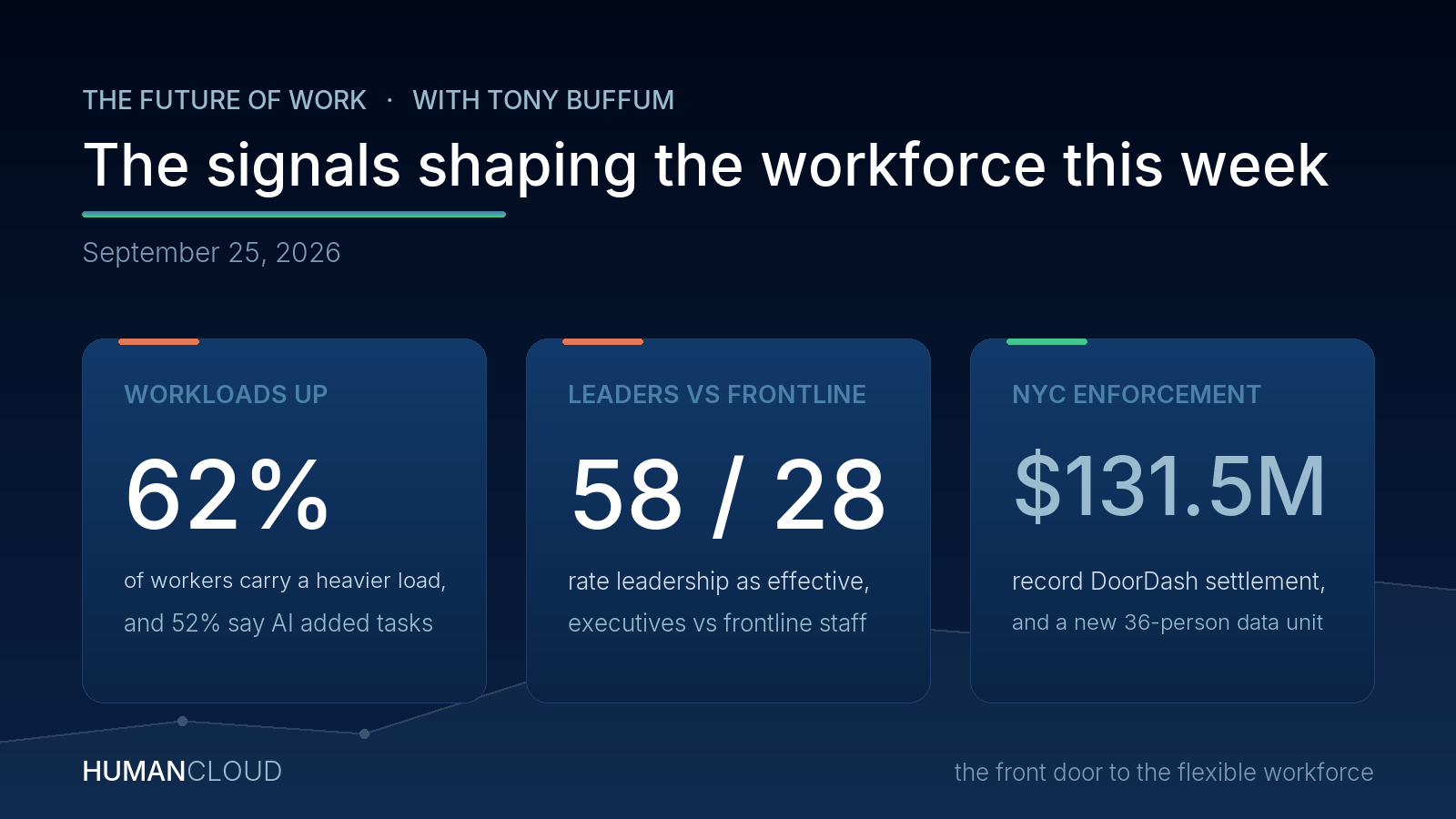
- The productivity gain is landing on people. Korn Ferry surveyed more than 16,000 workers. 63% say AI made them more efficient, 52% say it added tasks to their role, 62% are carrying a significantly heavier load than two years ago, and 49% are exhausted by the pace of change.[1]
- Leaders and the frontline are describing different companies. AMN Healthcare surveyed 4,040 clinicians and leaders. 58% of executives rate their organization's leadership as effective. 28% of frontline staff agree. 79% of nurses plan to stay in nursing, but only 51% plan to stay with their current employer.[2]
- HR is being asked to manage the machines' relationship with people. 90% of managers say their firms run at least one tool that instructs, monitors, or evaluates workers, and legislators and unions are moving on algorithmic management. A dedicated "robot relations" function is now a serious HR conversation.[3]
- The regulator just pulled up a chair. New York City took a record $131.5 million from DoorDash for underpaying more than 260,000 delivery workers, the largest worker settlement in the city's history.[4] The same agency is standing up a 36-person data and analytics unit with the gig economy as a stated priority.[5]
|
Here's my interpretation of the data:
- The signals this week point to the same pressure point. Enterprises leaned hard into efficiency, AI gave them the tools to do it, and now the workforce is showing the strain. Burnout is climbing,[1] worker trust is eroding, and the gap between what leaders think is happening and what workers are living is widening.[2] That is not a morale problem. It is an operational one, and it shows up in attrition, absenteeism, and the quality of work you are actually getting.
- The contingent workforce sits directly in the middle of this. Flexible talent strategies were originally sold as an efficiency play. They still are, but the smarter organizations are now also using them as a pressure valve, keeping core headcount from being crushed while still meeting output demands. The buyers who get ahead of this are the ones thinking about workforce composition as a risk management question, not just a cost question.
- The pressure valve now comes with a pay-data audit. New York built its DoorDash case on pay records, and DoorDash now reports its pay data to the city every month for three years.[4] If flexible capacity is absorbing the strain in your organization, the classification and pay trail behind it has to be audit-ready before someone asks for it. Our own study says only four in ten companies have a formal flexible-talent policy at all.
Here's how Human Cloud is helping:
Be in the room with your peers.
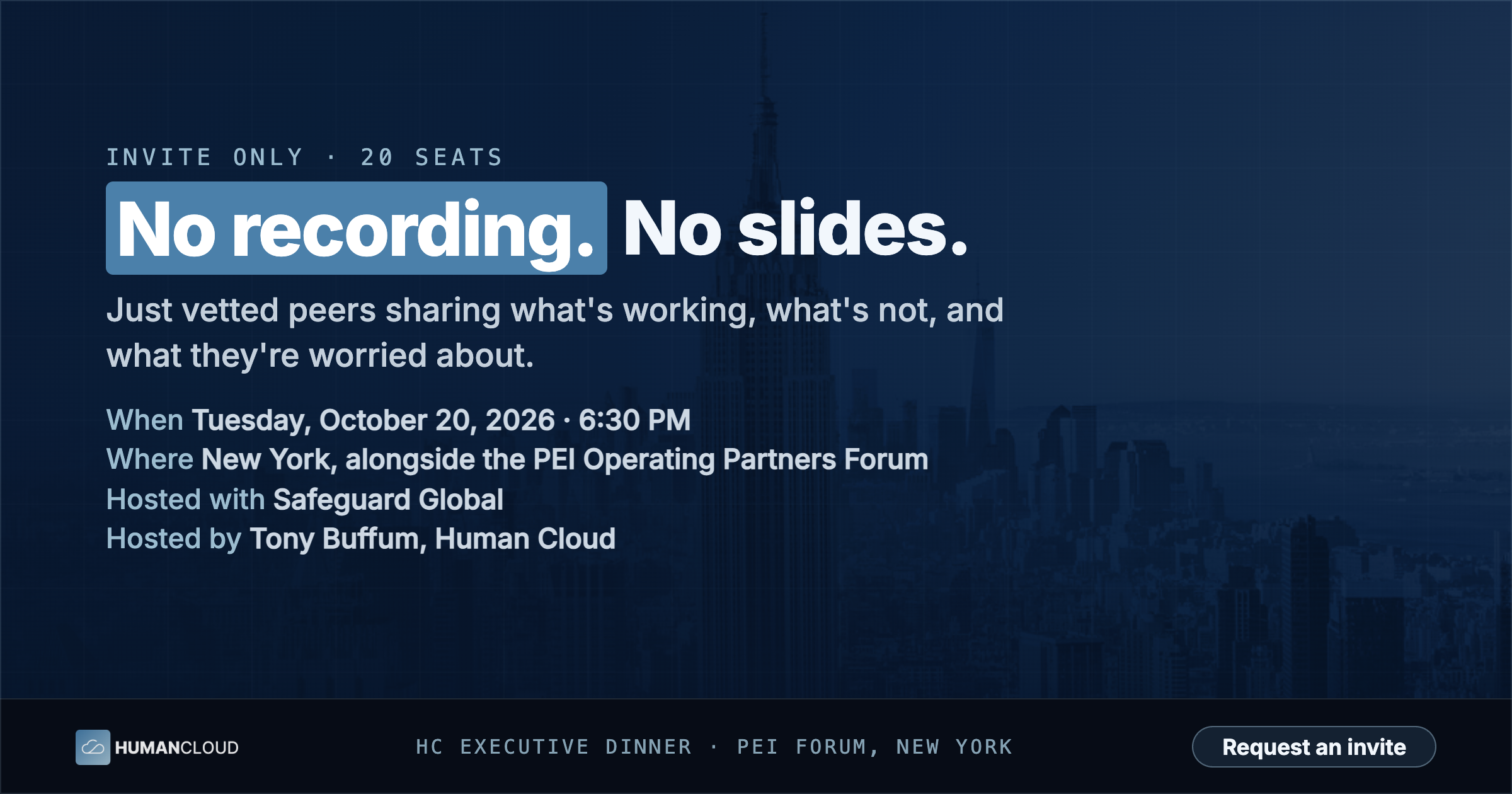
Dallas is full. Our next table is New York: twenty private equity operating partners and portfolio talent leaders, dinner on Tuesday, October 20, alongside the PEI Operating Partners Forum, hosted with Safeguard Global.
|
Twenty seats. Tuesday, October 20, New York.
| Request an invite → |
Can't be there in person? Book a virtual executive briefing »
We'd love to see how we can help,
- Tony
|
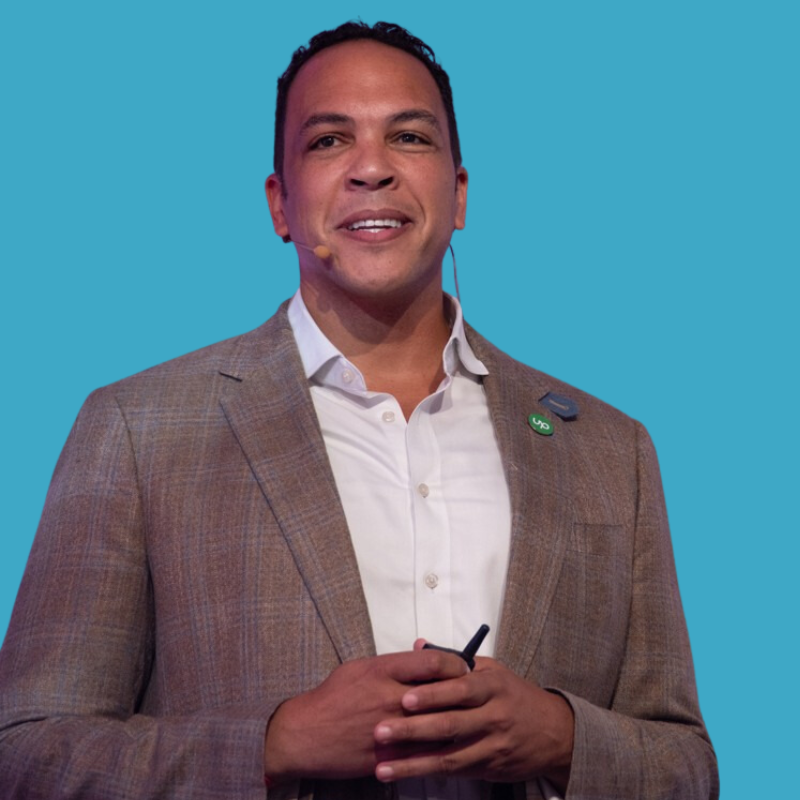
Tony Buffum Co-Founder & Chief Strategy Officer at Human Cloud. 20+ years in global HR and talent transformation. Former CHRO at FLIR Systems, VP HR at Stanley Black & Decker, VP HR Client Strategy at Upwork. Grab time with me » |
|
PS: My conversation with Kelly Monahan is out this week. She ran the Upwork Research Institute and now works with executives on the people side of AI. Her point: AI transformation has no technology problems left, only change management, reskilling, and work redesign, and that work belongs to HR. Listen to our conversation » |
Human Cloud Data
Companies stopped shopping for AI and started buying the work underneath it
Every 76 seconds, someone is looking at a solution profile on Human Cloud. Here is what they are searching to find them.
What the data shows
Finance searches rose 233% this month. Pharmacy rose 167%. Data labeling rose 150%. Aerospace and defense rose 100%. HR rose 60%. Trucking rose 50%. AI fell 50%, strategy fell 40%, and healthcare and life sciences fell 67%.
That is this week's story showing up in our own data. Searches for AI fell by half while searches for data labeling rose 150%. Companies are past the headline and buying the specific work underneath it. Finance, HR, and pharmacy are the functions carrying the heavier load Korn Ferry describes, and they are being bought instead of staffed. Strategy is what a stretched company defers. In the last full week, 24 distinct categories were searched on the platform. Nobody is browsing an industry. They are buying a specific problem off their plate.
| Finance | +233% this month |
| Pharmacy | +167% this month |
| Data Labeling | +150% this month |
| Aerospace and Defense | +100% this month |
| HR | +60% this month |
| Trucking | +50% this month |
| Strategy | -40% this month |
| AI | -50% this month |
| Healthcare and Life Sciences | -67% this month |
Percentages are this month vs last month.
|
Want to take action? Launch an RFP for your biggest challenges. Need mid-level AI developers with data analytics chops? There was an RFP for that. Flexible talent that scales across MENA and APAC business teams? There was an RFP for that. Launch an RFP → |
Sources
[3] CNBC - As AI reshapes work, the 'robot relations' department may be coming to HR
[5] Briefs - NYC launches data-first gig economy watchdog (36-person DCWP analytics unit, $4 million)
Get insights like this every week
Join 26,000+ leaders staying ahead of the flexible talent market.