What the Recent Fed Rate Cut Means for the Flexible Talent Industry
The Fed’s recent rate cut is more than just a monetary policy adjustment; it’s a signal that the labor market is cooling and companies are being forced to rethink their workforce strategies. For the flexible talent industry, this moment is both a test and an opportunity. Demand may soften at the edg
 Tony Buffum
Get this in your inbox every week. Join 26,000+ subscribers.
🚨 Human Cloud Acquires PeopleGPT to Build the Premier AI-Driven HR Community 🚨
Access Full Articlebreaking news
Tony Buffum
Head, Enterprise Strategy
Share this!
Access Full Article
The full article is reserved for Human Cloud members. Login or apply to membership to read and share.
Login Apply for membershipSubscribe
What the Fed Did, and Why
On September 17, 2025, the Fed cut its benchmark rate by 25 basis points, lowering the federal funds target range to 4.00%–4.25%. It is the first rate cut since December 2024.
The Fed made clear in its statement and in accompanying comments that it was acting in response to signs of weakening in the labor market, even though inflation remains elevated. Some of the key data points:
Unemployment: The rate ticked up to about 4.3% in August, up from 4.1–4.2% earlier in the year.
Job Growth: Non‐farm payrolls rose by only about 22,000 jobs in August, well below expectations. Prior months were revised downward significantly, reducing the estimated strength of hiring earlier in the year.
Inflation: Consumer Price Index (CPI) rose about 2.9% year over year in August; core CPI (excluding food and energy) about 3.1%. Both remain above the Fed’s longer‐run target of 2%.
In its press release, the Fed said: “Job gains have slowed, and the unemployment rate has edged up but remains low. Inflation has moved up and remains somewhat elevated.” Federal Reserve
So: the Fed judged that the downside risk to employment had risen enough, despite inflation risks, to justify lowering rates, in hopes of supporting growth and preventing a sharper deterioration in the labor market.
What This Means for the Flexible Talent Industry
By “flexible talent industry,” I mean the world of freelancers, contractors, gig workers, boutique consultancies, remote/contract staff, etc.; workers and firms that rely on non‐permanent, often specialized labor arrangements. How does a Fed rate cut like this affect them?
…
Access Full Article
The full article is reserved for Human Cloud members. Login or apply to membership to read and share.
Login Apply for membership
Tony Buffum
Head, Enterprise Strategy
Former VP of HR Client Strategy at Upwork, CHRO at FLIR Systems and VP of HR at Stanley Black & Decker.
Human Cloud
Human Cloud connects the worlds best flexible talent solutions. Through AI driven search, contextual matching (think Amazon recommendations for business case and feature sets needed), and an embedded service layer that can be managed internally, companies can shortlist, rank, and deploy 10,000+ solutions across every geography.
More From Human Cloud
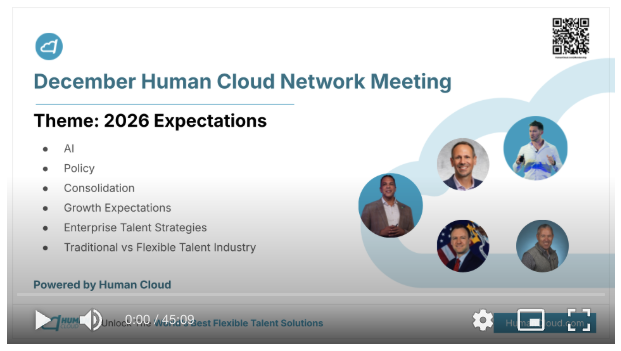
December, Human Cloud Monthly Recap
Read More >>
Spencer Joins Human Cloud To Lead UK and Europe Partnerships
Read More >>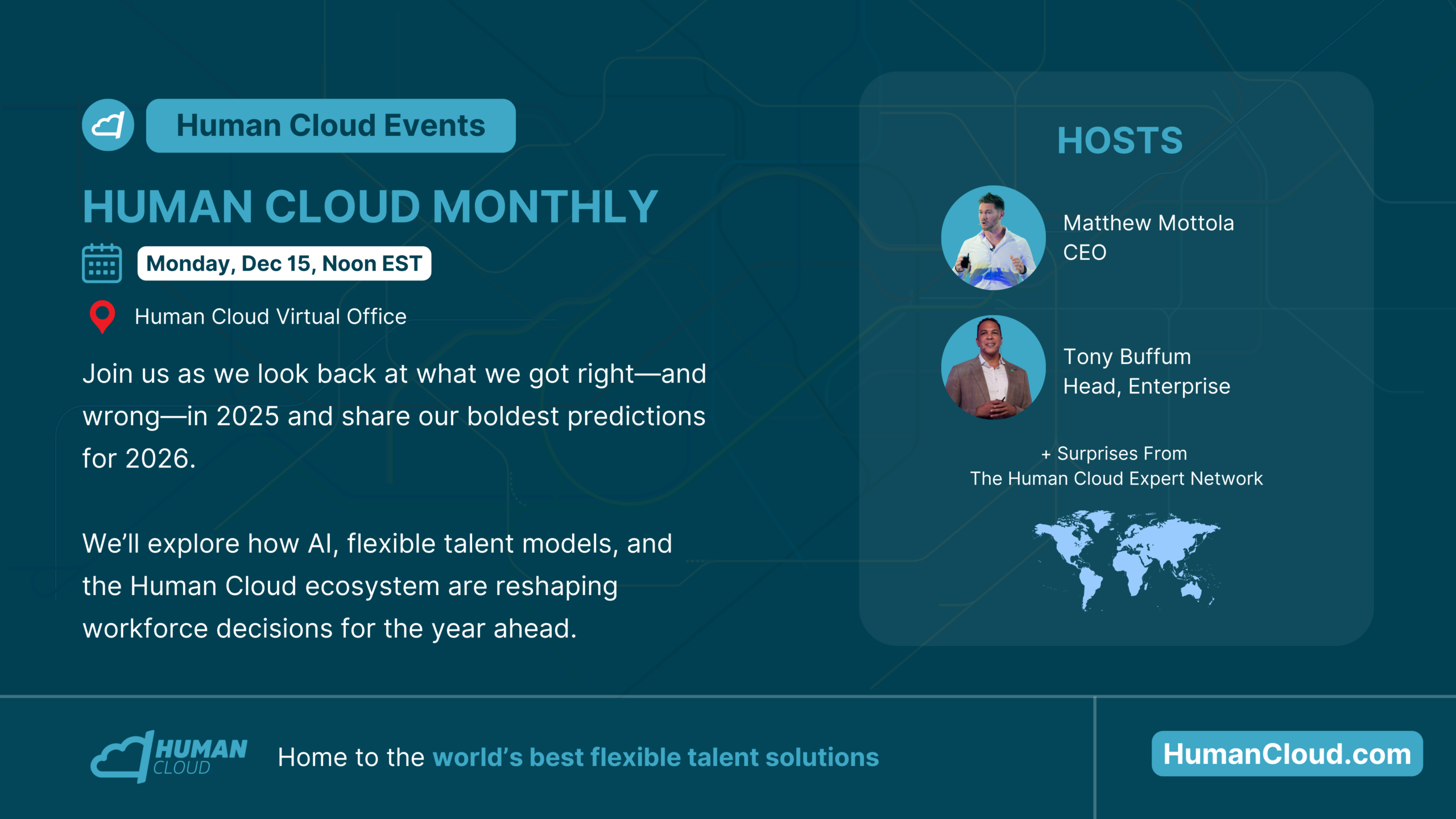
HC Monthly, December
Read More >>subscribe to Human Cloud Insights
Get insights like this every week
Join 26,000+ leaders staying ahead of the flexible talent market.